
In the world of professional landscape design, the most successful lighting is felt, not seen. The latest trend in landscape lighting ideas for an upscale look, is that of the hidden landscape lighting. This involves integrating your landscape lighting into the overall landscape design in such a way that the lighting fixtures are unseen.
True luxury is found in the effect. The soft glow, the dramatic shadow, and the architectural reveal, while the lighting hardware takes a backseat.
To achieve this level of sophistication, we utilize three primary techniques to “hide” the light within the landscape: moonlighting, well lights, and integration of the lights directly into the hardscape elements.
Moonlighting: The Sky-Down Approach
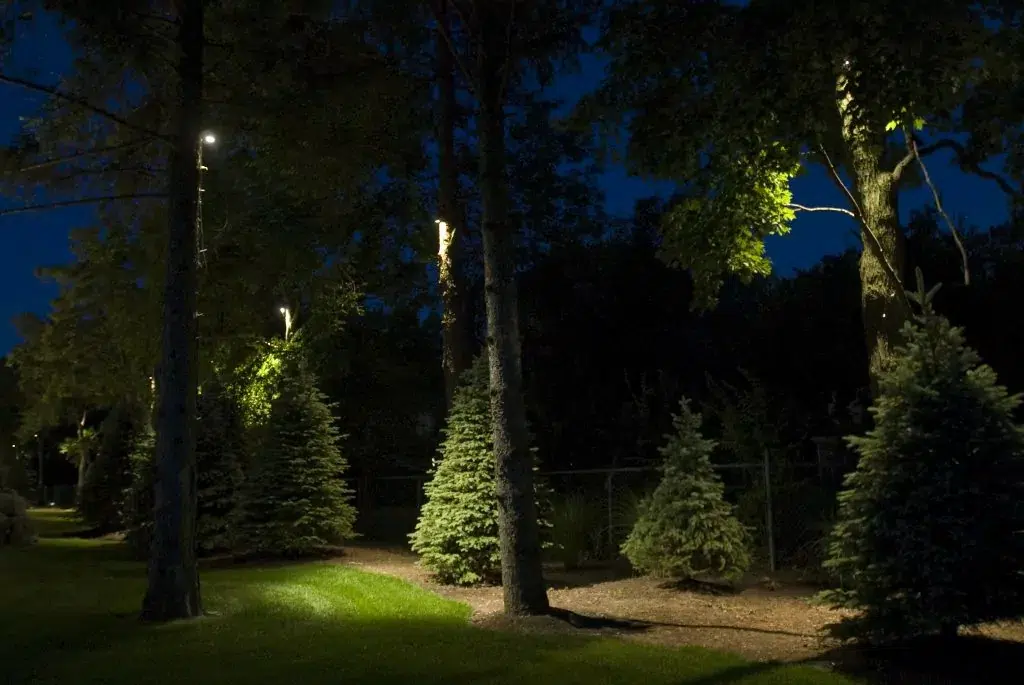
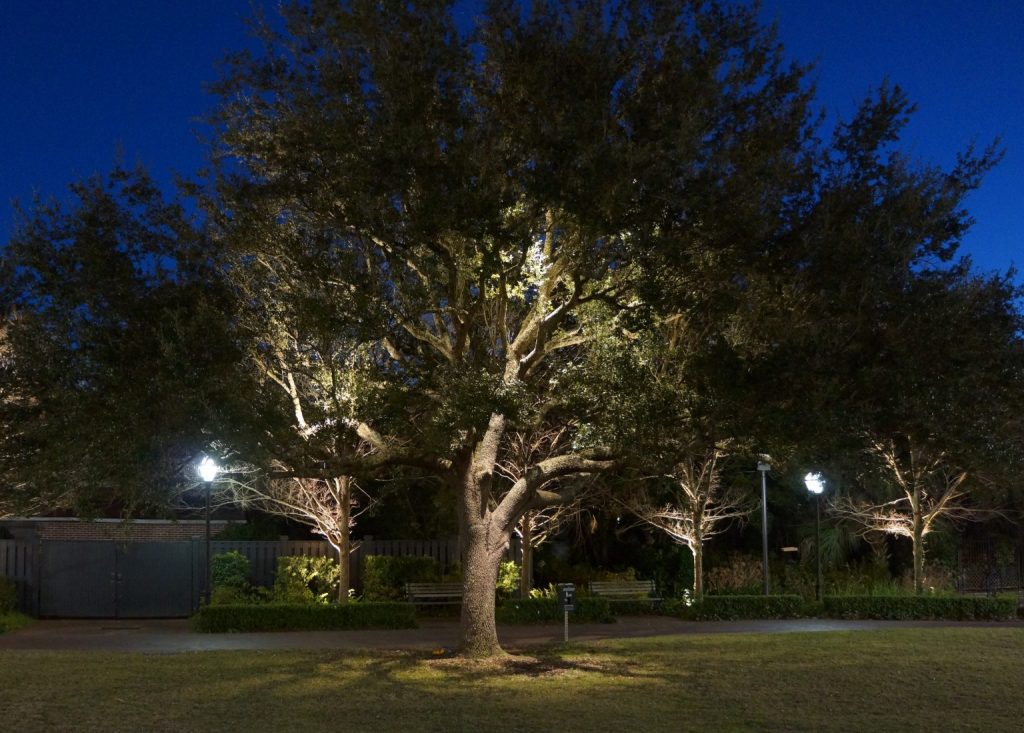
One of the most transformative techniques in our repertoire is Moonlighting. This method mimics the ethereal, silvery glow of a full moon by placing shielded, low-voltage fixtures 20 to 40 feet high in the canopies of Atlanta’s mature trees, such as Oaks, Maples, and Poplars.
- The Effect: Light filters through the branches and leaves, casting natural, dappled shadows across lawns and driveways.
- The Technical Edge: We utilize cool-white LEDs (4000K to 5000K in light color) specifically for this application. Unlike the amber tones of traditional lighting, this color temperature accurately replicates natural lunar light.
- Optical Precision: By using narrow beam spreads (15 degrees to 30 degrees), we ensure the light filters through the branches, casting natural, dappled shadows across driveways and lawns without creating “hot spots.”
- The “Invisible” Factor: We use cowled (shielded) fixtures color-matched to the bark and mounted with tree-safe stainless steel standoffs. This protects the tree’s health while ensuring the landscape lighting hardware remains virtually hidden from the ground.
Well Lights: Flush-Mounted Hidden Landscape Lighting Fixtures
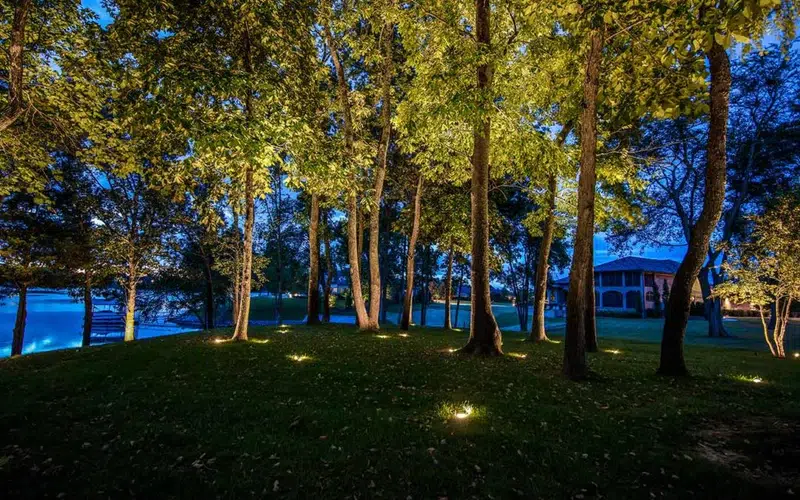
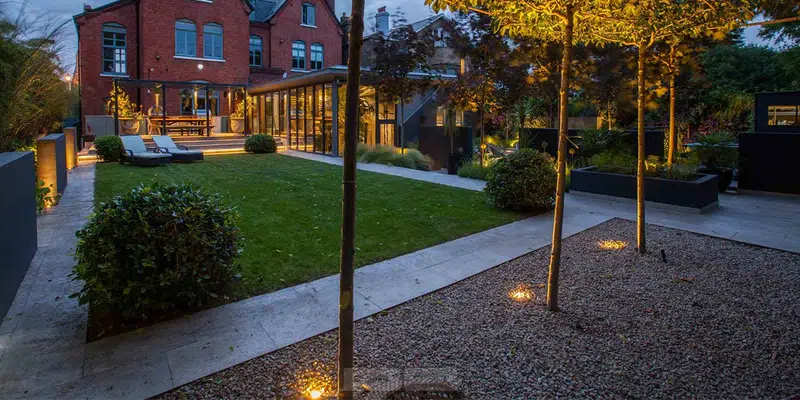
To highlight the structural “bones” of a property without cluttering the turf with hardware, utilize well lights. These are professional-grade fixtures designed to be buried flush with the ground, whether in mulch, gravel, or turf.
- Specimen Tree Uplighting: We place well lights at the base of a Japanese Maple or a large specimen Holly to emphasize the trunk’s texture and branch structure.
- The Technical Edge: A common DIY mistake is “fixture drowning.” A solution to this is a dedicated gravel drainage sump beneath every well light to ensure longevity and prevent moisture intrusion during Georgia’s heavy rains.
- Architectural Grazing: By positioning these flush-mounted lights at the base of a brick or stone wall, we “graze” the surface. This technique often uses a 10 to 15 degree light-to-surface angle to reveal the masonry texture and detail that flat, head-on lighting would otherwise hide.
- The “Invisible” Factor: These fixtures are completely mower-safe. During the day, they disappear into the landscaping; at night, they provide a powerful upward wash that seems to emanate from the earth itself.
Hardscape Integration: Lighting the Path, Not the Poles
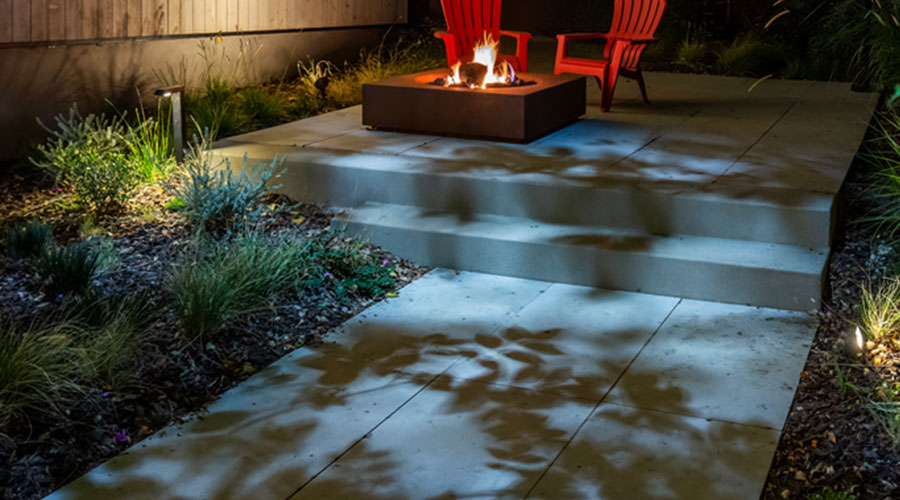
Integrated hardscape lighting involves embedding the light source directly into the permanent structures of the home during the construction phase.
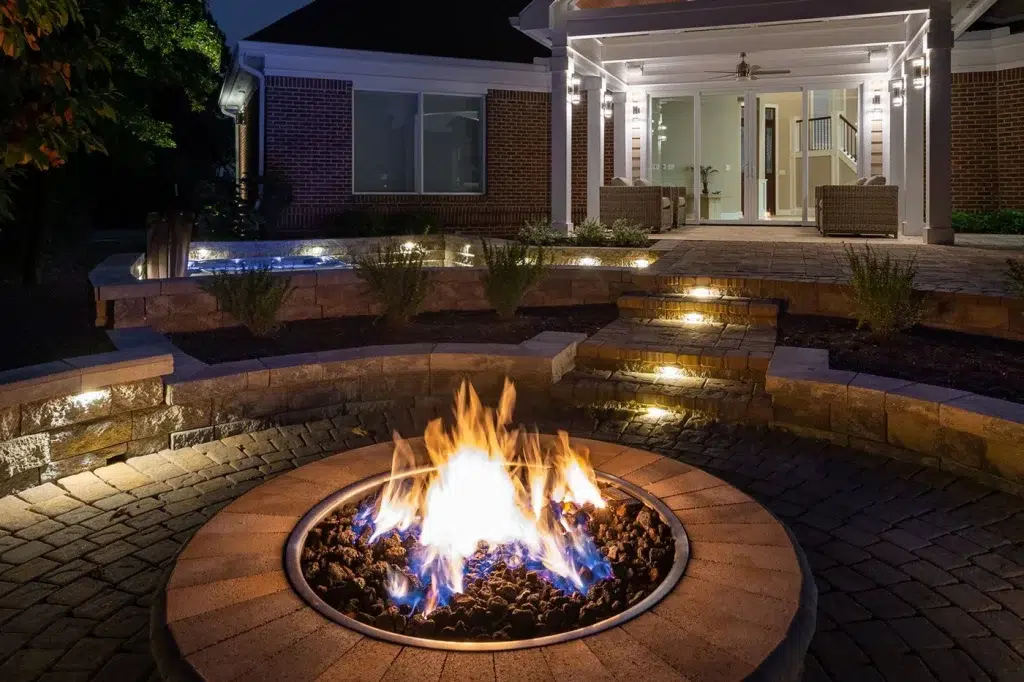
- Integrated Step Lighting: Instead of placing poles next to a staircase, tuck slim LED bars under the “nose” or tread of stone stairs.
- Under-Cap Illumination: Recess linear LEDs beneath the overhang of retaining walls or outdoor kitchen counters.
- The Technical Edge: Modern hardscape lighting requires foresight. We integrate slim LED bars or small individual lights under the “nose” of stone stairs or beneath the overhang of retaining walls. These are often dimmed to 20%–40% output to provide safety without overwhelming the nocturnal ambiance.
- Color Harmony: For masonry, we pivot back to warmer tones (2700K). This mimics the natural warmth of stone and brick, making the home feel inviting and solid.
- The “Invisible” Factor: The hardware is literally mortared into the masonry. There are no visible bulbs, no protruding wires, only a clean “line of light” that defines the home’s geometry and ensures safe passage.
The Oasis Standard: Directional Shielding to Hide Light Sources
Even when a fixture cannot be fully buried or elevated, it can still be hidden. We use directional shielding, shrouds and “eyebrow” covers, to ensure that the light only goes where it is intended.
This precision prevents “light trespass” into windows or the eyes of guests. By focusing the light downward or inward, we adhere to Dark Sky principles, reducing light pollution. This ensures that your landscape remains an oasis of calm, not a floodlit stadium.
Conclusion: Designing for the Dark with Hidden Landscape Lighting
Achieving a completely “hidden” lighting plan requires a level of mastery that goes beyond simple electrical work. It requires a marriage between the mason, the electrician, and the designer before the first stone is laid.
Whether you are looking to define a winding driveway or reveal the architectural heritage of a brick manor, the best landscape lighting starts with a master plan for the shadows.
Ready to find the hidden potential in your landscape? Contact Oasis Landscapes & Irrigation today for a professional site audit.