Search “outdoor TV,” and you’ll mostly find people shopping for the television itself. Search “TV in a gazebo,” and you’ll find people already picturing the structure: a shaded spot to watch the game, host friends, and stay outside long after kickoff. In metro Atlanta, more homeowners every fall are moving game day out of the living room and into the backyard.
This guide covers what it takes to put a TV in a gazebo, from what the structure costs to how the screen gets mounted, powered, and protected from Georgia weather. It’s based on how Oasis Landscaping and Irrigation scopes these projects with homeowners, including the covered TV space founder Kevin Paulen built at his own house.
What Kind of Structure Does a TV Need?
The main thing you will want is a solid roof. Whether you call it a gazebo, a covered pergola, or a pavilion, the roof is what makes a mounted TV practical. A traditional pergola with an open slatted top softens afternoon sun but won’t keep a screen dry, which is why Oasis often builds pergolas with solid roofs for TV spaces. Louvered roof systems, which adjust for sun, shade, or full rain coverage, are a middle ground.
Whatever you choose, keep in mind the angle of the sun throughout the year, and orient the structure so the roofline doesn’t throw glare across the screen during afternoon kickoffs.
In practice, the TV is rarely where these projects start. Most homeowners come to Oasis wanting shade and a place to entertain, then add a grill, then a small kitchen, and then the TV. Planning for the screen from the beginning, even if it comes later, makes power, mounting, and roof overhang far easier to get right.
How Much Does a Gazebo With a TV Cost?
Budget is the biggest factor in what kind of structure makes sense, starting with whether it gets a solid roof at all. That’s why Oasis starts every consultation with budget rather than design. Most builds fall into one of four tiers:
Open-air, no solid roof: roughly $20,000-$30,000. Pressure-treated wood with a crisscross top, often built on an existing pad. Good for shade, but not ideal for a permanently mounted TV.
Basic build with a solid roof: roughly $50,000-$60,000. A standard footprint with enough weatherproofing to protect a standard TV.
Enclosed, with roof and power: roughly $75,000-$85,000. Cost climbs with materials, and cedar beams in particular have gotten significantly more expensive.
Large, fully finished builds: $100,000 and up. Often attached to the house and tied into a pool or outdoor kitchen, finished to match the interior. Structures designed for large groups usually land here.
These figures shift with property and material, but they’re a realistic starting point before getting attached to a design.
How Big Should a Gazebo TV Space Be?
Design around how you’ll actually use it. Most homeowners aren’t planning for fifty guests; they want room for eight or ten people to grill out, talk, and watch the game. Sizing for that everyday group usually produces a better-proportioned space than building for capacity you’ll rarely use.
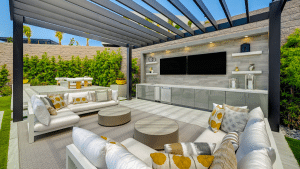
An example pergola build done by Oasis Landscapes
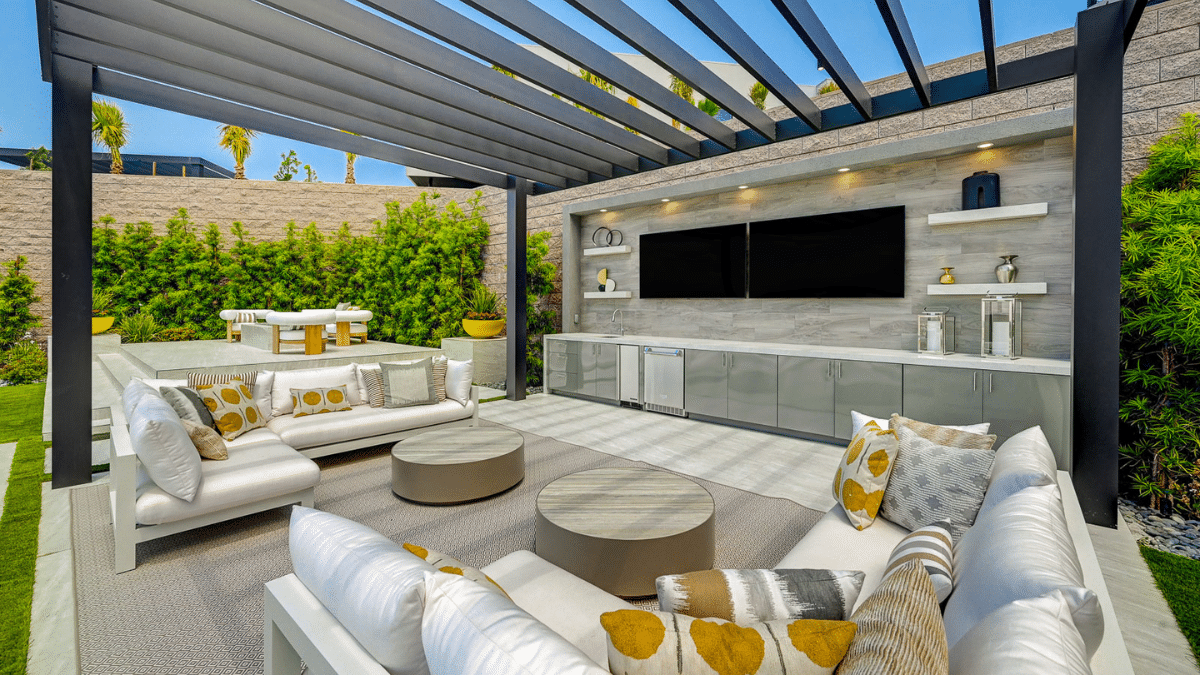
- Structure: about 14 x 22 feet, set away from the house
- Seats: six to eight people comfortably
- Screen: 85-inch TV on a drop-down mount
- Power: new subpanel and permit, with outlets, fans, and heaters
- Connectivity: internet booster, no cable run from the house
Weather-resistant sectionals or deep-seated sofas anchor the viewing area. Folding chairs stored nearby are a great idea for when added friends and family drop in for those big games. Arrange seating in a semicircle facing the screen to ensure everyone has a good view.
A Smaller Option: Enclosing the Space Under a Deck
One of the most underrated alternatives to a freestanding gazebo is enclosing the area under an existing deck. For homeowners with an existing deck and a tighter budget, it’s worth considering before committing to a new build.
“We did that at our own house, and it was great. I already had a patio, an outdoor fireplace, and a pond, and now we could put furniture there that didn’t get wet. We used under the deck way more than we ever used the deck itself.”
Material Options for Your Entertainment Gazebo
Material choice usually starts with the house. If the home has siding, Oasis Landscapes will often match it with a paintable material. Pressure-treated wood is the most common base, and posts can be wrapped, trimmed, painted, or finished with stacked stone for a more polished look. Cedar is the most common upgrade, though recent price increases can push a project into a higher budget tier. For finished examples, see our modern pergola ideas and pergola and gazebo styles.
Mounting Your Television Into Your Gazebo
A high, fixed mount is the default many homeowners picture, but it isn’t comfortable for a full game. A drop-down mount solves that: the TV stays up out of the way when not in use and lowers to eye level for viewing. On Kevin’s 85-inch TV, the shock-absorbing mount lowers one-handed and pivots left and right. It was a significant expense, and one he considers well worth it.
Plan screen height and seating distance together so no one is craning their neck from the back row. For larger structures, a projector and screen is another option, as long as the screen stays shaded from direct sun.
Keeping the Television Dry
Roof overhang does most of the work. Kevin used a TV cover for years before realizing his overhang made it unnecessary: “It has to be raining almost sideways for it to get wet.”
Thankfully, weatherproof-rated TVs have come down in price, but they’re still better at handling sunlight than a heavy rain. Pair these TVs with good weather coverage rather than hoping the weather-resistant TV can sit out in full exposure.
We don’t recommend indoor TVs in your gazebo or pergola, as these aren’t built to handle Georgia humidity and pollen. An outdoor-rated model is worth considering if the screen stays mounted year-round. For most builds, a solid roof with enough overhang is the better investment: a one-time structural decision instead of a weekly habit of covering and uncovering the screen.
Does a Gazebo TV Need Cable, or Can You Stream?
If the gazebo sits away from the house, running a cable line can be more trouble than it’s worth. An internet booster or extender lets you stream everything with just a power connection to the structure.
Signal strength depends on your provider and property as much as the equipment. A recent client found that out when a cheaper provider left him buffering constantly, a situation made worse by his house sitting below street level. Switching back to his original provider solved the problem. So be sure to test your signal at the gazebo before finalizing booster placement.
Do You Need an Electrician for a TV in a Gazebo?
Yes. Wiring a structure for a TV, fans, lighting, and heaters is not a DIY job. An electrician needs to confirm whether your panel can handle the added load, and in many cases that means adding a subpanel and pulling a permit, as Kevin had to do at his own house.
Outdoor outlets also require GFCI protection under the National Electrical Code, per the Electrical Safety Foundation International. How the line is run from the house, and whether it needs to be buried, depends on your site and local code; your electrician will determine the compliant method for your property.
Best Sound Setup for Your TV in a Gazebo or Pavilion
For most outdoor spaces, a soundbar with a built-in subwoofer is the simplest and most popular choice. Sound quality has come far enough that full surround systems rarely come up for outdoor builds, and open-air acoustics behave differently than an enclosed room anyway. For more coverage, a pair of weather-rated outdoor speakers near the viewing area adds clarity without carrying sound into the neighbors’ yard.
Common DIY Mistakes
A common mistake when creating an outdoor entertainment space with a TV in a gazebo or pergola is to shortchange the roof. Corrugated plastic panels and thin metal may look fine going up, but they don’t hold up for long. A roof that isn’t built for the load and the weather won’t protect the TV, or anything else under it. The roof is the last place to cut corners on a gazebo TV build.
What Else Makes a Gazebo TV Space Work on Game Day?
A second screen. Between college Saturdays and NFL Sundays, many households follow more than one game. A smaller outdoor-rated TV near the grill or bar keeps a second game running while the main screen stays on the featured matchup.
A fire feature. A fire pit or outdoor fireplace keeps guests outside on cold nights, and patio heaters can stretch the season into December. If you’re planning hardscaping, consider adding a fire feature into the layout from the start.
Food and drink within reach. Even a simple cooler, counter, and trash bin a few steps from the seating makes hosting easier, and it can grow into a full outdoor kitchen over time.
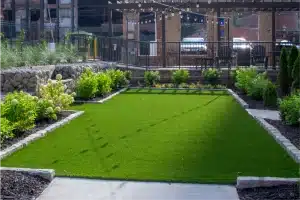
A solid foundation. A well-graded, properly drained patio keeps chairs level and coolers out of the mud after a week of rain on Georgia red clay. On a sloped lot, a tiered patio with a retaining wall can create separate zones for seating, grilling, and yard games.
Lighting and landscaping. String lights set the mood, path lighting keeps guests from tripping, and evergreen shrubs or ornamental grasses around the gazebo add privacy and a finished look year-round.
Keeping a Gazebo TV Space Game-Ready
Check irrigation and plantings around the patio each spring, clear gutters and drainage near the gazebo each year, and reseal hardscaping periodically to keep it looking sharp under regular foot traffic.
Planning Your Gazebo TV Space
Whether you’re picturing a simple open-air structure for weekend grilling or a fully enclosed, wired-for-everything game-day retreat, the starting point is the same: figure out your budget and how you’ll use the space, then let the design follow. Contact Oasis Landscaping and Irrigation to talk through what fits your property and your budget.