
Introduction
A landscape that supports pollinators season after season isn’t built by scattering a few flowering perennials through a border. It is built on bloom succession, plant selection, and habitat that holds up through the parts of the year when nothing is in flower. Georgia’s native plants evolved alongside the state’s pollinators. They bloom exactly when local bees, butterflies, and hummingbirds need them, tolerate our red clay and humidity without constant intervention. This seasonal guide provides a comprehensive list of native plants for a pollinator garden in Georgia.
The ecological math behind this matters. According to Birds Georgia, roughly 75% of the world’s flowering plants and 35% of global food crops depend on insect pollination, and native host plants are essential to that system in a way non-native “pollinator plants” simply aren’t: butterfly and moth caterpillars can only feed on specific native species, and without those caterpillars, an estimated 96% of North America’s terrestrial bird species would be unable to raise their young. Georgia’s Department of Natural Resources adds that the state’s more than 4,000 native bee species (not the non-native honey bee) perform the majority of that pollination work, and identifies habitat loss as a leading driver of pollinator decline. Plant selection on a single residential or commercial property is a meaningful conservation lever, not just a landscaping choice.

This guide breaks the planting year into four windows – early spring, summer peak, fall, and late fall through winter. Our guide contains planting practices, pesticide guidance, and companion planting strategy for Georgia native plants for a pollinator garden.
Early Spring: Breaking Dormancy
Pollinator activity in Georgia rarely stops completely, even in winter, but the first significant nectar flush begins as early as February and builds through May.
Carolina Jessamine (Gelsemium sempervirens) is often the very first nectar source of the year, its yellow trumpet blooms opening while most of the landscape is still dormant. Note that every part of the plant is toxic if ingested, which should inform placement on properties with pets or young children.
Eastern Red Columbine (Aquilegia canadensis), the State Botanical Garden of Georgia’s designated Spring Bloomer of the Year, blooms March through May and is a strong early nectar source for hummingbirds, bees, and butterflies. It performs best in part sun to part shade and self-seeds readily, making it a good low-maintenance anchor for a woodland-edge planting.
Oakleaf Hydrangea (Hydrangea quercifolia) bridges the gap into summer, with large pollen-dense blooms that draw heavy native bee activity in partial shade.


Spring Planting Practices
Early spring is the best window for installing new perennials and shrubs in Georgia. Cooler soil temperatures and regular rainfall reduce transplant stress before summer heat arrives.
Companion planting:
Pair Eastern Red Columbine with Piedmont Phlox and Blue Star (Amsonia tabernaemontana) for overlapping bloom and a mix of heights and textures that reads as an intentional bed rather than a scattered planting.
Pesticides
Avoid any pre-emergent herbicide or systemic insecticide application near these beds in spring. This is exactly when native bees are most active and most vulnerable to residue.
Summer Peak: The Garden at Full Capacity
Summer is when a well-designed pollinator landscape should be doing its most visible work.
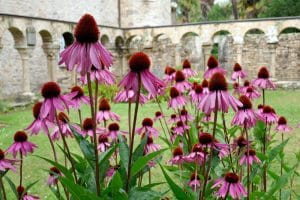
Purple Coneflower (Echinacea purpurea) blooms continuously through summer. It is one of the most reliable bee-attracting perennials available in the Southeast.
Black-eyed Susan (Rudbeckia spp.), the Garden’s Summer Bloomer of the Year, is a keystone plant supporting 29 specialist bee species and at least 20 species of butterfly and moth larvae. Black-eyed Susan tolerates poor soil and drought with ease.
Bee Balm (Monarda didyma and M. fistulosa) and Coral Honeysuckle (Lonicera sempervirens) both offer tubular red blooms shaped for hummingbird feeding.
Butterfly Weed (Asclepias tuberosa) is the only larval host plant Monarch caterpillars can consume. Without milkweed in the landscape, there’s no monarch life cycle to support.
Dense Blazing Star (Liatris spicata), the Garden’s Georgia Native pick, blooms July through September and prefers lean, well-drained soil.


Summer Planting Practices
Summer plantings need consistent watering ; group plants by moisture need so drought-tolerant species like blazing star and coneflower aren’t overwatered alongside buttonbush.
Companion planting:
Combine Black-eyed Susan, Purple Coneflower, and Butterfly Weed for a full-sun drift that blooms in relay through the entire season and supports both nectar feeders and monarch larvae in the same bed.
Pesticides:
Summer is peak season for pest-control product use, and it’s also peak pollinator activity. This is the highest-risk window for pesticide-related bee die-off. Tolerate minor foliage damage rather than spraying, and if intervention is truly necessary, treat at dusk after pollinators have left for the day and avoid any product applied directly to open blooms.
Fall: Fueling the Migration for Pollinators
As many designed landscapes fade, several of Georgia’s natives plants for a pollinator garden are just reaching peak performance. Critical timing for monarchs migrating south and native bees building fat reserves for winter.
Sunflower (Helianthus spp.), the Garden’s Fall Bloomer of the Year, is a keystone genus supporting 50 specialist bee species and at least 66 species of butterfly and moth larvae, blooming August through November.
Goldenrod (Solidago spp.) is, by Birds Georgia’s host-plant rankings, the single highest-value native perennial genus in the Southeast, supporting an estimated 115 species of moth and caterpillars, more than any other perennial group. Despite its reputation, goldenrod does not cause seasonal allergies; that’s wind-pollinated ragweed, which blooms concurrently.
Asters (Symphyotrichum spp.) rank second on that same list at roughly 112 host species, with Georgia Aster native specifically to this state and increasingly rare in the wild, often serving as the last significant nectar source before winter, blooming October into November.
Ironweed (Vernonia) and Joe Pye Weed (Eutrochium purpureum) round out the season with tall, structural late color heavily visited by bees and butterflies before frost.


Fall Planting Practices
Fall is an excellent secondary planting window in Georgia; warm soil and cooling air let root systems establish before winter dormancy without the stress of summer heat.
Companion planting:
Pair goldenrod and asters directly, their overlapping host-plant value and staggered bloom timing make this combination the single highest-impact pairing available for fall caterpillar and late-migrant support.
Pesticides:
Avoid any fall pesticide or fungicide application on or near these plantings, goldenrod and aster beds in particular are actively hosting overwintering caterpillar and larval stages that a fall spray would eliminate before they ever reach adulthood.
Winter: Building Native Pollinator Habitats, Not Just Blooms
The most common mistake in an otherwise well-planned pollinator landscape happens in late fall: cutting everything back to the ground for a tidy winter appearance. This single decision undoes a great deal of the habitat value the rest of the planting was designed to provide.
Leave seed heads, hollow stems, and leaf litter standing through winter, wherever possible. Many native bee species overwinter inside hollow or pithy stems, and butterfly and moth species overwinter as eggs, chrysalides, or adults tucked into leaf litter and brush piles, material that a fall cleanup removes wholesale. Birds Georgia’s guidance on habitat structure lists undisturbed leaf litter, dead wood, and brush piles alongside live plants as essential wildlife cover, not just aesthetic afterthoughts.
Just as important: leave the soil itself undisturbed. The majority of Georgia’s native bee species nest underground rather than in hives or cavities, so heavy fall tilling, deep mulching, or bed turnover can eliminate nesting habitat even in a planting with ideal bloom selection above ground.
Winter Planting Practices
Delay cutting back perennials until temperatures are reliably warm in spring (typically past the last frost date) rather than following a fall or early-winter cleanup schedule.
Companion planting:
Pair late-season bloomers like Georgia Aster with structural evergreen shrubs or ornamental grasses left standing through winter, so the bed retains habitat value and visual interest even after bloom ends.
Pesticides:
Winter dormant-oil or systemic treatments applied to nearby trees and shrubs can persist in tissue and affect pollinators the following spring. Time any necessary treatments outside the active bloom season and away from pollinator plantings entirely.
Native Plants for a Pollinator Garden: Bringing It All Together
A pollinator landscape sequenced from February through November left structurally intact through winter does more than support local wildlife. It produces a property that looks intentional in every season, requires less irrigation, and reduces long-term maintenance relative to a landscape built on non-native ornamentals. For Georgia property owners, that combination of ecological performance and reduced upkeep makes native plants for a pollinator garden one of the more practical landscape investments available.
Oasis Landscaping designs and installs native pollinator plantings tailored to your property’s sun exposure, soil type, and irrigation infrastructure, contact us to see how a seasonally sequenced native landscape could work on your property.