When the summer heat finally breaks in Metro Atlanta, many homeowners start thinking about raking leaves and putting the yard to bed. But here in the South, fall is not the finale of the gardening season. It is the beginning of one of the most enjoyable ones. With mild winters and plenty of growing time remaining, autumn is the perfect moment to refresh your beds, containers, and entryways with vibrant fall flowers that last well into spring.
Oasis Landscapes & Irrigation has been designing and maintaining Atlanta landscapes since 1989, and seasonal color rotations are part of nearly every property we care for, from residential garden beds to HOA entrances and commercial campuses. Whether you want a pop of color in your garden beds, bright hanging baskets, or a full landscape makeover, this guide covers why fall planting works so well in Georgia, when to plant, and our favorite plants for cool-season color.
Why Is Fall a Good Time to Plant Flowers in Georgia?
Spring gets most of the attention, but after more than three decades of working in Atlanta’s dense red clay, our crews have found that fall offers distinct advantages for establishing healthy plants.
• Warm soil, cool air. The air cools down in fall, but the soil holds summer warmth. University of Georgia Extension research shows that pansies, the backbone of Southern winter color, grow best when soil temperatures are between 45 and 65 degrees Fahrenheit, and their roots effectively shut down below 45 degrees. Planting while the soil is still in that range gives roots time to establish before winter.
• Less stress on new plants. Without the stress of July heat and humidity, new plants can put their energy into building strong root systems instead of simply surviving.
• Plenty of growing time. Metro Atlanta’s first frost typically arrives in early to mid-November, depending on where you live, giving fall flowers several weeks to settle in before cold weather hits.
• Color that carries into spring. Cool-season annuals planted in fall often bloom through mild winter stretches and then put on a second, even bigger show in early spring.
When Should You Plant Fall Flowers in Atlanta?
Timing is critically important with cool-season color. Plant too early, while September heat lingers, and your fall flowers can stretch, stall, or struggle. Plant too late, and they will not have time to develop healthy root systems before the first hard freeze.
For most of Metro Atlanta, the best time for planting cool-season annuals runs from early October into early November.
Tip: Where you live in the Metro matters more than most planting guides admit. The Old Farmer’s Almanac places the average first fall frost around November 13 at Hartsfield-Jackson Airport, but the Peachtree-DeKalb Airport station, much closer to our Winters Chapel Road office, averages November 2. North metro communities like Alpharetta, Roswell, and Canton typically see frost earlier still, so homeowners there should aim for the front half of the window.
Trees, shrubs, and perennials can go in from September through late fall, with evergreens ideally planted earlier in the season so their roots can establish before winter winds arrive. Fall is also the time to plant spring-flowering bulbs for color next March and April.
Our Top Picks for Fall Flowers in the Atlanta Landscapes
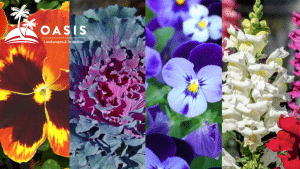
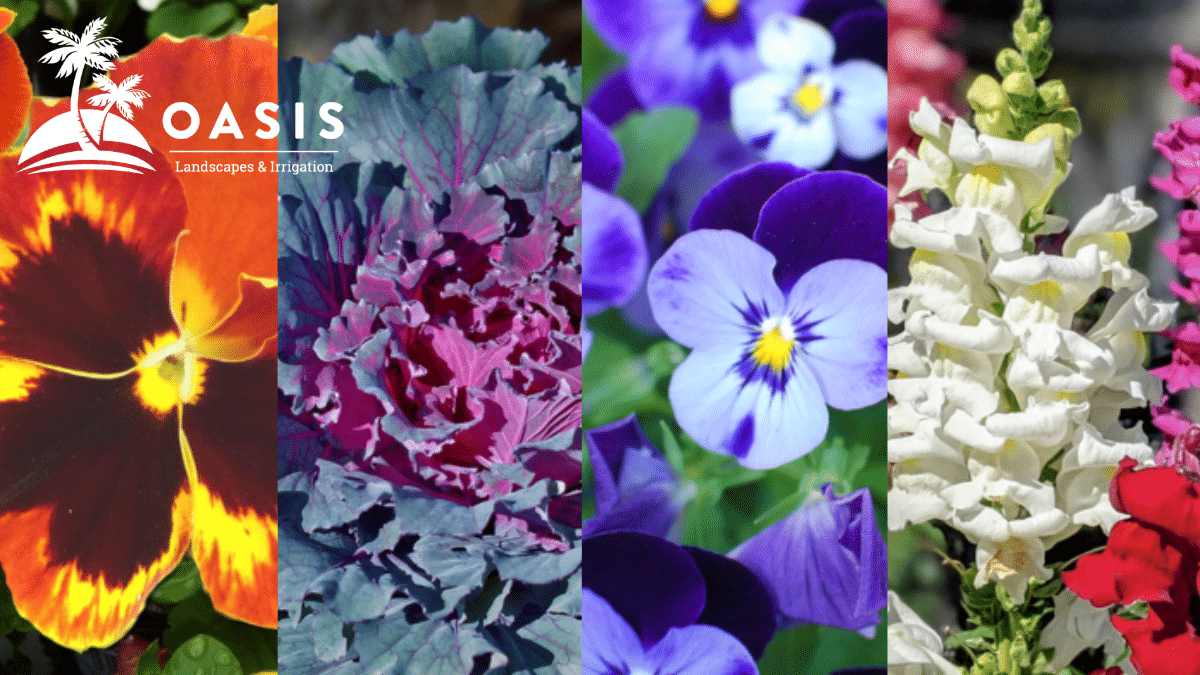
These four cool-season favorites are the backbone of the seasonal color installations Oasis crews put in every fall across residential and commercial properties. We rely on them because they tolerate Atlanta winters beautifully, and together they offer a broad range of colors, textures, and heights.
Pansies
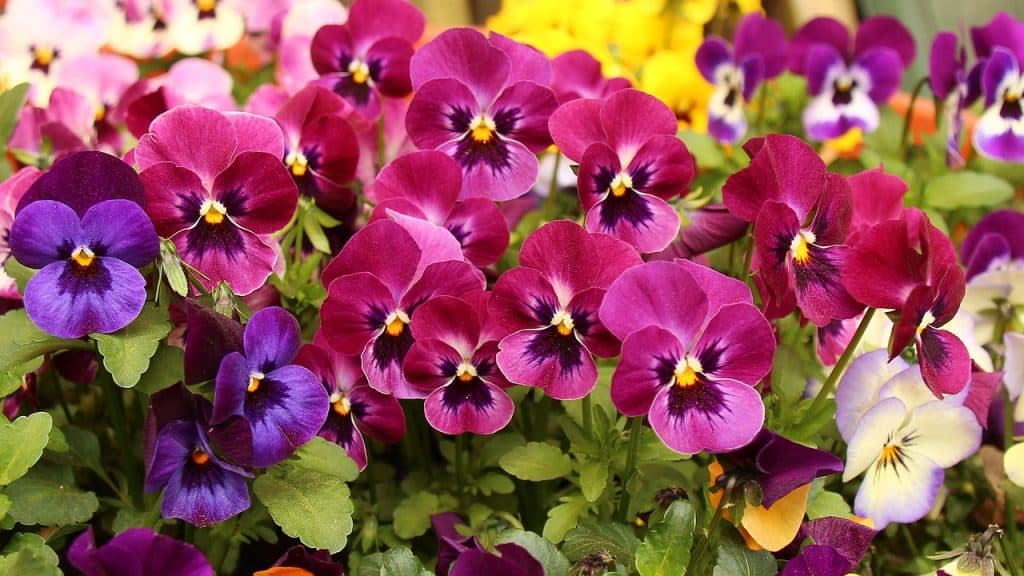
A drive through Atlanta suburbs in fall and winter reveals that Southerners love our pansies. Pansies are a classic Southern choice for adding fall flowers and winter color to garden beds, and with good reason. Their cheerful “faces” come in nearly endless varieties of shade, from deep purple and blue to yellow, orange, white, and bi-color blends. Best of all, they are remarkably resilient bloomers, capable of handling frosty mornings and bouncing back once temperatures warm.
• Light: Full sun to part sun. At least six hours of sun keeps them blooming heavily.
• Planting: Space plants about 6 to 8 inches apart in loose, well-drained soil so they can fill in over winter. UGA recommends raised beds and a soil pH between 5.4 and 5.8.
• Care: Deadhead spent blooms consistently to encourage more flowers. Pansies also have specific feeding needs: in cold soil, they cannot use ammonium-based nitrogen efficiently, so a fertilizer that supplies nitrogen in nitrate form, formulated for cool-season annuals, keeps them blooming through winter.
• Best uses: Mass plantings along borders, walkways, and entry beds, or as colorful “fillers” in mixed containers.
Violas
Violas are the pansy’s smaller, more prolific cousin. Their fall flowers are petite, but they make up for that by producing far more blooms per plant. Violas tend to handle cold snaps even better than pansies and often keep flowering through winter weather that briefly slows their larger relatives.
• Light: Full sun to part shade.
• Planting: Space about 6 inches apart. Their compact, mounding habit fills gaps quickly.
• Care: Similar to pansies. Deadhead occasionally and keep soil evenly moist but never soggy.
• Best uses: Edging beds, tucking into rock gardens, spilling from window boxes, and filling hanging baskets with a soft carpet of color.
Ornamental Cabbage
While not a traditional flower, ornamental cabbage (and its frilly-leaved cousin, ornamental kale) is the perfect companion plant to pair with your fall flowers. These plants form large rosettes of foliage with centers in rich shades of pink, purple, cream, and white. Their colors actually intensify as nights turn cool, meaning they often look their absolute best in late fall and winter. In our experience, cabbage installed in [month] usually colors up by [timeframe] in north metro landscapes.
• Light: Full sun for the brightest color.
• Planting: Give each plant about 12 to 18 inches of space. Set them at the same depth they were growing in the nursery pot.
• Care: Water consistently and remove any yellowing lower leaves to keep plants tidy.
• Best uses: Bold focal points in beds, symmetrical pairs flanking a front door, and eye-catching centerpieces in large containers.
Snapdragons
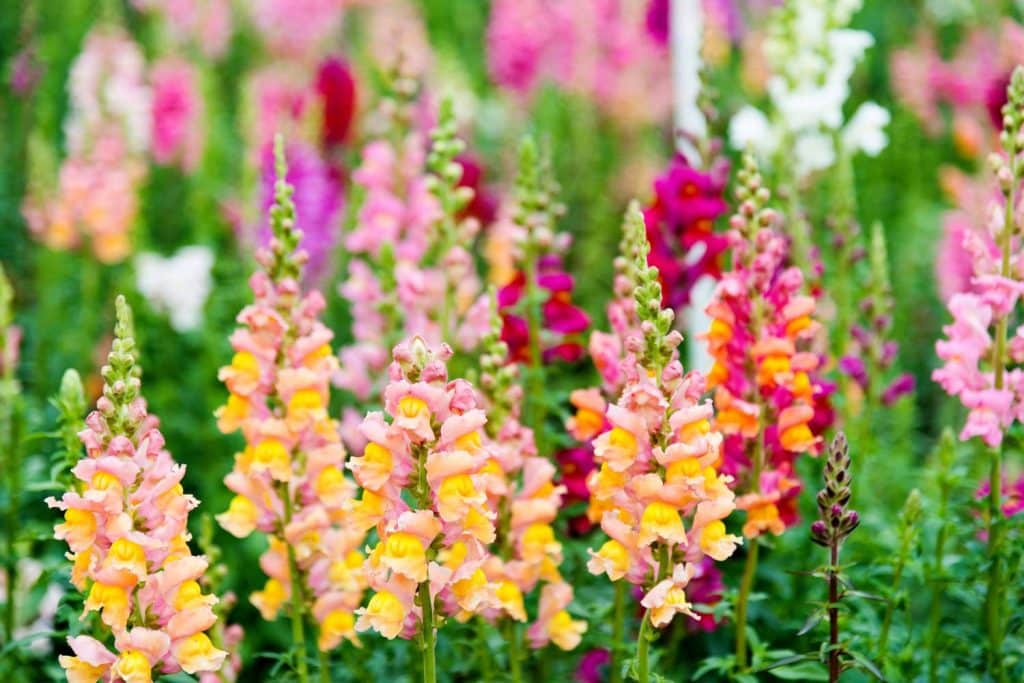
Snapdragons are perennials that are most often grown as annuals. They feature tall floral spikes in colors of red, pink, yellow, orange, white, and burgundy. These charming spiky blooms bring vertical interest and a cottage-garden feel to your beds. As an added bonus, they are a favorite of bumblebees and other pollinators. In Atlanta’s mild climate, fall-planted snapdragons often bloom in autumn, then rest during the coldest weeks, and then return with a strong flush of flowers in spring.
• Light: Full sun.
• Planting: Space each about 8 to 12 inches apart. Place taller varieties toward the back of beds.
• Care: Cut back faded flower spikes to encourage new blooms. Taller varieties may appreciate protection from strong winter wind.
• Best uses: Snapdragons look great in the background of shorter flowers. They also do well in containers. These flowers make lovely fresh indoor arrangements and are often used in cutting gardens for that purpose.
Other Fall Bloomers Worth Considering
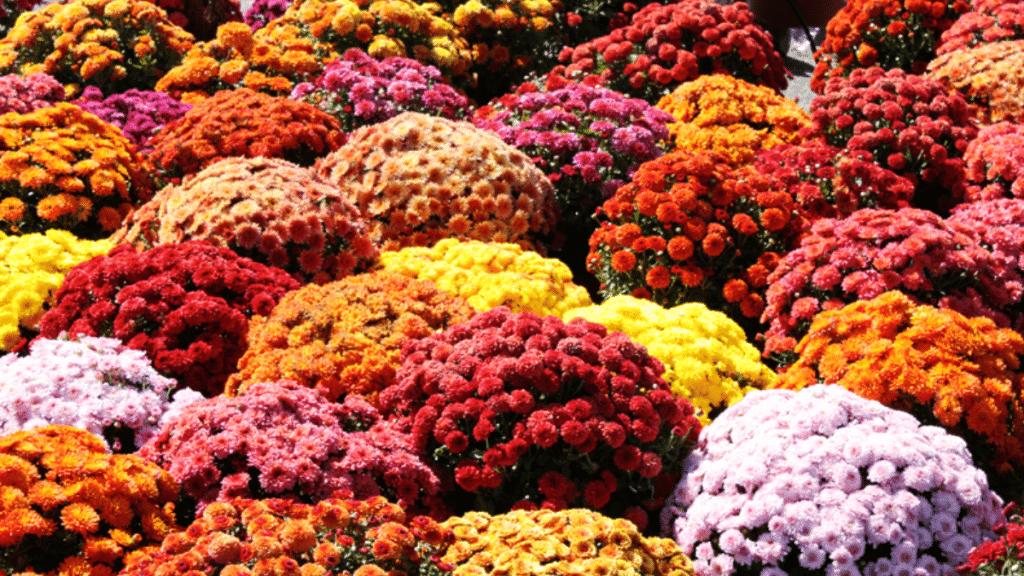
Chrysanthemums are a fall classic. Nothing says “fall” more than a container of mums in autumn colors. Additionally, native asters and goldenrod are fall favorites to bring late-season blooms and pollinator activity to flower beds.
How Do You Design Fall Flowers in Your Landscape?
The art of flower gardens is not just in selecting the flowers; it is in how they are combined and arranged in the flower beds.
• Layered plantings: Place the taller snapdragons in the back, ornamental cabbage in the middle, and pansies or violas at the front edge. This creates depth and keeps every plant visible.
• Plant in groups: Large sweeps of a single color read beautifully from the street and look far more polished than a handful of mixed plants. Our guide to choosing a garden color palette can help you plan combinations.
• Incorporate structural elements: Fall flowers shine work best against a backdrop of shrubs and trees. These larger, permanent plantings provide year-round structure. Many have striking fall foliage, such as Japanese maples, oakleaf hydrangeas, and ornamental grasses.
See more of our recent installations.
Seasonal Color for HOAs and Commercial Properties
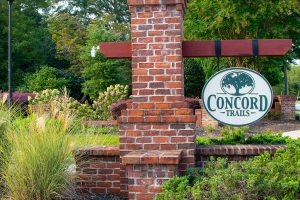
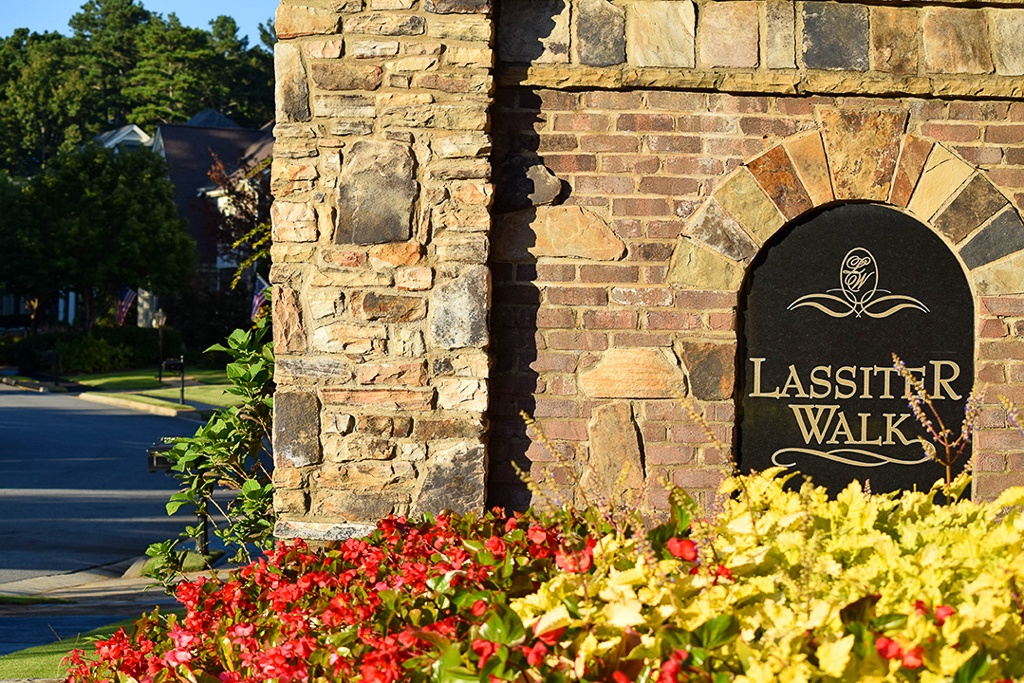
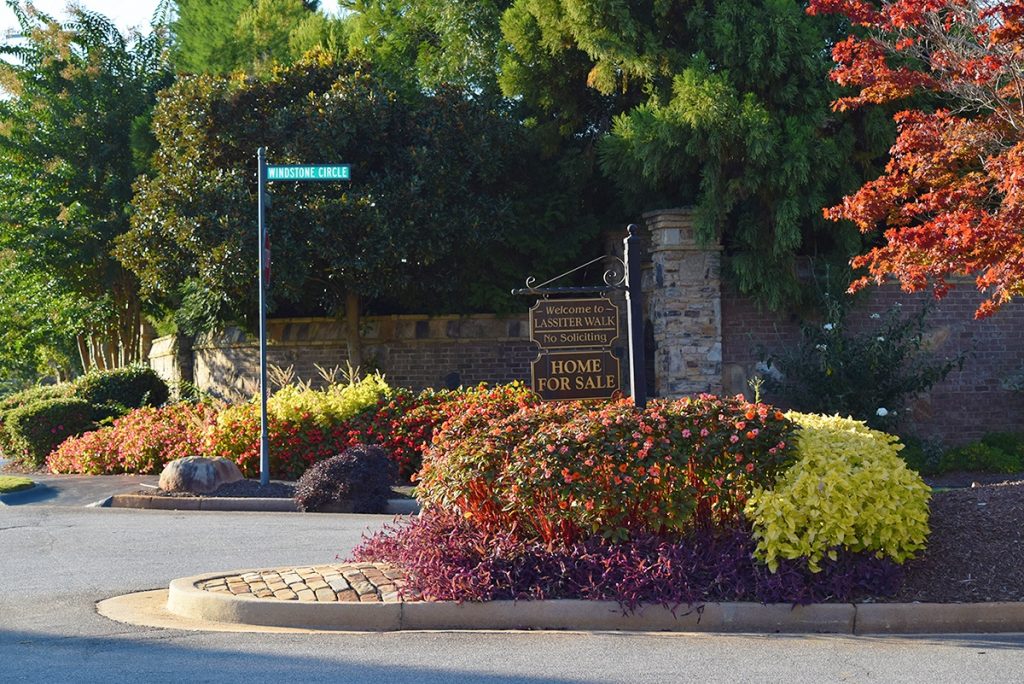
On the commercial side, seasonal color is included in nearly every maintenance contract Oasis manages. Rotating beds at neighborhood entrances, monument signs, and common areas each fall and spring keep a property looking cared for all year. Learn more about our commercial seasonal color programs or see ideas for enhancing a neighborhood entrance.
How to Prepare Garden Beds for Fall Planting
The preparation for healthy and riotous fall blooms begins below the surface. Much of Metro Atlanta sits on dense red clay, which tends to compact, drain poorly, and hold too much water in wet weather. Cool-season annuals do not tolerate soggy roots, so soil preparation is essential.
• Clear out spent summer annuals and weeds.
• Loosen the soil and work in compost or a quality planting mix to improve drainage and structure.
• Test your soil. UGA’s soil testing program, available through your county Extension office, will tell you your pH and nutrient needs before you plant.
• Check that beds drain well after rain, and correct low spots where water collects. Persistent standing water may call for professional drainage solutions.
• Finish with 2 to 3 inches of mulch, like pine straw or pine bark, to insulate roots, hold moisture, and keep weeds down.
How Should You Adjust Irrigation for Fall Plantings?
New fall flowers need consistent moisture for their first several weeks while roots establish, even as temperatures cool. At the same time, established landscapes need far less water in fall than they did in summer. Running a summer irrigation schedule into October wastes water and can lead to root rot and fungal problems.
This is the ideal time to schedule a seasonal irrigation tune-up. The Oasis team can inspect heads, adjust zones and run times, and make sure your system is optimized for the cool season. A smart irrigation controller can also adjust run times automatically as the weather changes. Later in the season, plan for winterizing your system before the first hard freeze.
Frequently Asked Questions
When should I plant pansies in Atlanta?
Most Atlanta homeowners get the best results planting pansies from early October into early November, with north metro communities like Alpharetta, Roswell, and Canton aiming for the earlier part of that window. This is why at Oasis we aim to get our plantings in during October, ideally. The goal is to get roots established while soil temperatures are still above 45 degrees.
Will pansies and violas survive an Atlanta winter?
The short answer is – yes! Both are very cold-tolerant, which is why you frequently see them in beds throughout Metro Atlanta. According to UGA Extension, pansy foliage wilts when air temperatures drop below 25 degrees. This is a natural defense response, and healthy, well-rooted plants usually recover and bloom again as temperatures rise.
Why is my ornamental cabbage not showing color?
Ornamental cabbage develops its brightest center colors once nights turn consistently cool. If plants were installed early in the fall, their color will deepen as temperatures drop.
Do snapdragons bloom in winter?
In Atlanta, snapdragons usually bloom in the fall, slow down during the coldest part of winter, and then return with a strong wave of blooms in early spring.
How often should I water new fall plantings?
Like most new plantings, new fall plantings need to be kept consistently moist. As roots become established, your new plants need less frequent watering. Be sure to check the soil moisture before additional watering, especially in heavy clay.
Bring Your Landscape to Life This Fall with Oasis
A beautiful fall landscape does not have to end when the leaves drop. With the right fall flowers, good soil preparation, and properly adjusted irrigation, your yard can stay vibrant from October through spring.
Whether you need a pop of color for your front entry or a full seasonal landscape makeover in Marietta, Alpharetta, Roswell, Canton, or the wider Metro Atlanta area, the team at Oasis Landscapes & Irrigation has you covered.
Contact us today to schedule your fall color installation.