
After over three decades of transforming backyards across Buckhead, Decatur, Alpharetta, and everywhere in between, We have heard just about every question a homeowner can ask. The one that comes up most? “Is it an outdoor entertainment space really worth it?” Our answer is almost always the same: done right, an outdoor entertainment space isn’t just worth it, it is one of the smartest investments you can make in your Atlanta home.
This article walks you through what that actually looks like, from the planning process and climate considerations to some estimated costs and the returns. Whether you’re dreaming of a simple fire pit, patio, or a full outdoor kitchen with pergola and lighting, this guide will help you go in with open eyes.
Why Atlanta Is Practically Made for Outdoor Living
Atlanta’s climate is a landscaper’s gift. With roughly 218 sunny days per year and mild springs and falls, we have a much longer outdoor living season than most of the country. Summers get hot and humid, sure — but a well-designed space with shade structures, ceiling fans, and misting systems can make even a July evening perfectly enjoyable.
Our winters are generally brief and mild enough that a fire feature — whether a stone fireplace or a clean-burning gas fire pit — can extend your outdoor season well into December and even January. I’ve had clients hosting New Year’s gatherings outside around a fireplace while friends up north were snowbound inside. That’s the Atlanta advantage.
What this means practically: an investment in outdoor living here pays dividends for 9 to 10 months of the year, not the 4 or 5 months a homeowner in Chicago or Boston might realistically expect.
Planning Your Space: Where to Start
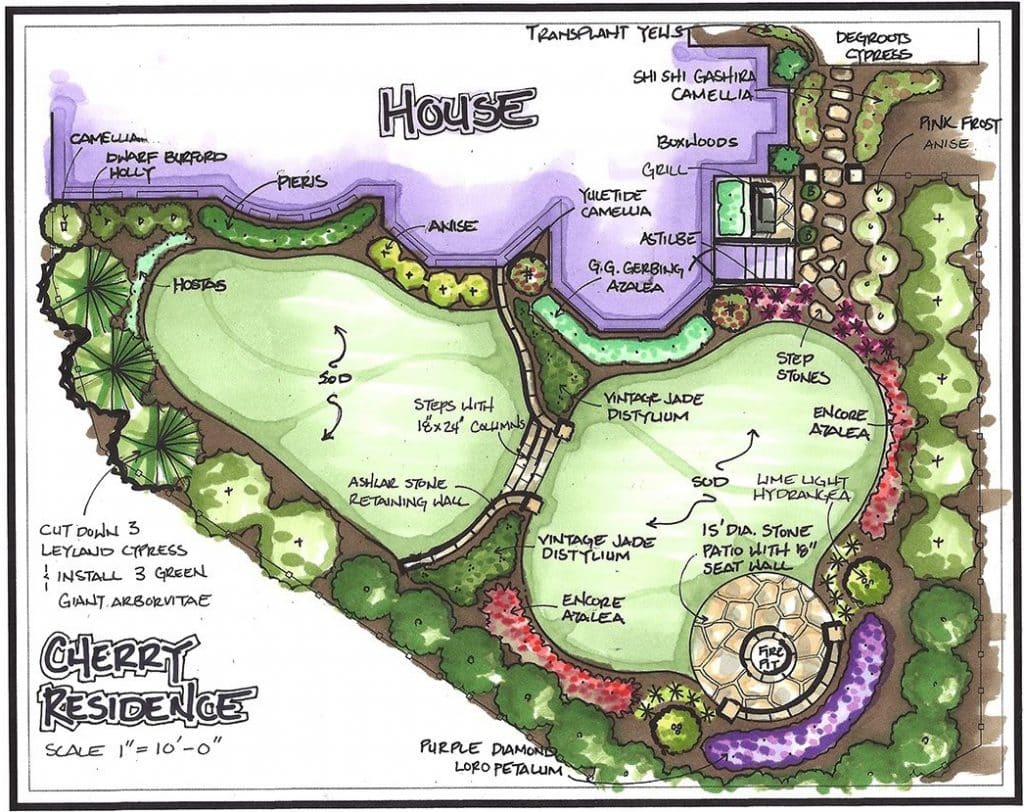
The most common mistake is homeowners jumping straight to the fun stuff, such as picking out a grill or Pinterest-ing pergola ideas, before they’ve thought through some foundational questions. Before we talk about aesthetics, the initial consultation should cover three things: function, flow, and budget.
Function: How do you actually want to use it?
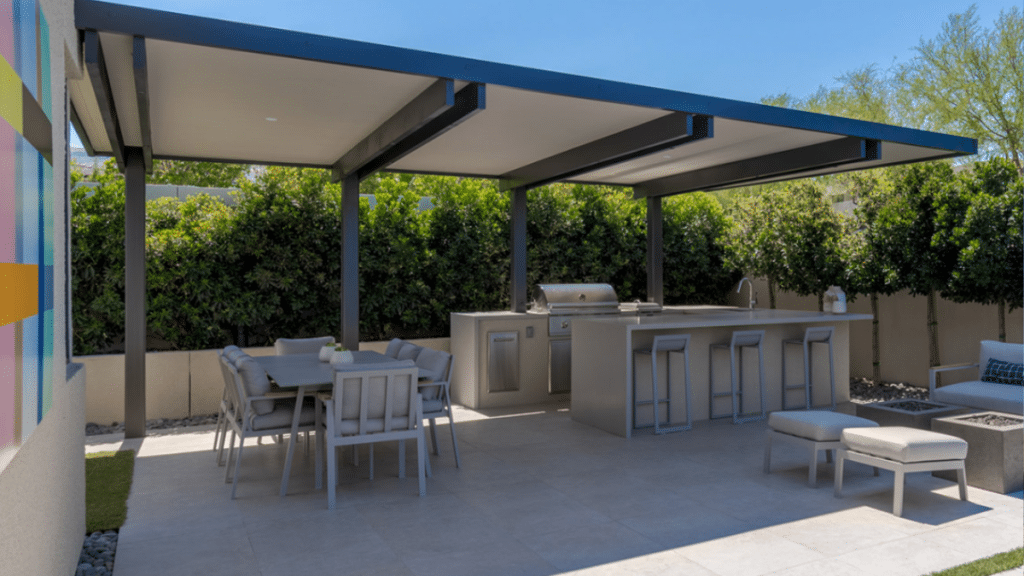
Are you a family of four who wants a safe play zone for the kids and a relaxed dinner space for Friday nights? Or are you an entertainer who hosts 30 people for football Saturdays? The answer completely changes the design. Large gatherings need more hardscape (patio square footage), multiple seating zones, and ideally an outdoor kitchen with prep and serving space. Intimate family use might call more for a cozy fire feature, a modest dining area, and lush landscaping for privacy.

Flow: How does the space connect to your home?
One of the most overlooked elements in outdoor design is the transition from indoors to outdoors. The best spaces feel like a seamless extension of the home. That means thinking carefully about door placement, step-down levels, sightlines from your kitchen or living room, and how guests will naturally move through the space.
Budget: Set a real number before you start.
Going into a project with a clear budget is the single biggest factor in avoiding mid-project stress. Good designers work within constraints; it’s what we do. But we can only do it if we know what we’re working with upfront.
“The best outdoor spaces don’t look designed, they look inevitable, like they were always supposed to be there.”
Understanding the Real Costs: A Practical Breakdown
Let’s talk numbers. One of questions we hear most is “what does this actually cost?” The best answer is: it depends. That may be a bit frustrating to hear, but most projects have budgets that vary widely based on scope, materials, and site conditions. While every project is unique, and our designers will take the time to understand your vision and scope your project properly, the following table can give a general idea idea of price ranges we commonly see for the below kinds of outdoor entertainment space builds.
| Project Element | Entry-Level | Mid-Range | Premium |
|---|---|---|---|
| Basic patio (pavers, 300–400 sq ft) | $8,000–$12,000 | $14,000–$20,000 | $22,000+ |
| Pergola or shade structure | $4,000–$7,000 | $8,000–$15,000 | $18,000–$35,000 |
| Outdoor kitchen / grill station | $5,000–$10,000 | $12,000–$25,000 | $30,000–$60,000+ |
| Fire pit or outdoor fireplace | $2,500–$5,000 | $6,000–$12,000 | $15,000–$30,000 |
| Landscape lighting | $1,500–$3,500 | $4,000–$8,000 | $10,000+ |
| Full entertainment space (all-in) | $25,000–$40,000 | $45,000–$80,000 | $90,000–$200,000+ |
These ranges are wide because details matter. A stamped concrete patio costs very differently than natural bluestone or Belgian block pavers. A prefabricated pergola kit is a fraction of the cost of a custom cedar structure with built-in lighting and ceiling fans. Always get itemized quotes — and get at least three of them.
PRO TIP: When reviewing contractor quotes, make sure they include site prep, grading, permits, and drainage in their numbers. These “invisible” costs are where budget surprises most often hide. A quote that looks low may simply be leaving these out.
The Benefits: Making the Case for the Investment
Now for the side of the ledger that gets people excited. The benefits of a well-designed outdoor space are both financial and personal.
Return on Investment (ROI)
According to national real estate data, a professionally designed outdoor living space can return 60–80% of project costs at resale – and in competitive Atlanta markets like Brookhaven, Sandy Springs, or East Cobb, the numbers can be even stronger. Homes with mature, thoughtfully designed outdoor spaces consistently sell faster and at higher prices than comparable homes without them. In today’s market, buyers increasingly treat outdoor entertaining areas as a must-have, not a bonus.
Lifestyle Value You Can’t Put a Number On
The best part of an outdoor entertainment space is arguably how you get to use it. Here’s what we tell clients who are on the fence: think about how much you spend on restaurants, weekend trips, and entertainment venues in a year. A beautiful outdoor space doesn’t just add value to your home, it becomes your personal retreat. It changes how you use your home, how your family spends time together, and how you connect with neighbors and friends.
Energy Savings
Something to consider when planning your outdoor entertainment space, is energy savings. A well-placed pergola or shade structure on the south or west side of your home can meaningfully reduce indoor cooling costs during Atlanta summers by blocking direct sun from windows and walls. Thoughtful tree placement, such as fast-growing native shade trees like Southern Magnolia or Willow Oak, compounds that benefit over time.
Common Questions Answered
How long does a project like this typically take?
For a mid-sized project, say a paver patio, pergola, and outdoor kitchen, plan on at least 4 to 8 weeks of active construction once materials are on-site. Lead times for materials (especially custom pergolas and stone) can add 4 to 8 weeks to the front end. Start planning in fall or winter if you want to be enjoying your space by Memorial Day.
What permits do I need in Atlanta?
Most structural work such as pergolas, decks, retaining walls over a certain height, gas lines for outdoor kitchens, requires a permit obtained through your city or county. This is non-negotiable and also protects you. Any legitimate contractor will handle permitting as part of their process. Be wary of anyone who suggests skipping it to “save time.”
What’s the best patio material for Atlanta’s climate?
Porcelain pavers and natural stone (like bluestone or travertine) are excellent long-term choices for our climate. They handle freeze-thaw cycles well, don’t fade, and look well as they age. Concrete pavers are a great mid-range option as well. We generally steer clients away from plain poured concrete for Atlanta entertainment spaces, as it cracks, stains, and becomes slippery when wet. However, for the right project, stamped concrete or mixed materials can be a viable option. Whatever you choose, proper base preparation and drainage are more important than the material itself.
Should I do gas or wood for a fire feature?
Both have their advocates. Gas is cleaner, easier to use (push-button ignition), and increasingly required or preferred in many HOA communities. Wood creates that authentic campfire experience (the crackle, the smell) that many clients love. If convenience and low-maintenance are priorities, go gas. If you love the ritual of building a fire, wood is hard to beat. Can’t decide? Some clients do both: a gas fire pit on the main patio and a wood-burning fireplace in a secondary seating area.
How do I choose a landscaping contractor I can trust?
Look for someone who is licensed and insured in Georgia, has verifiable local references (not just online reviews), and provides a detailed written contract with a payment schedule tied to milestones. Ask to see completed projects similar in scope to yours. Be cautious of unusually low bids; they almost always signal corners being cut somewhere.
A Few Final Thoughts From the Field
Every outdoor entertainment space worked on tells a different story. Some are modest in budget but rich in personality. Others are large estate-style investments that feel like resort amenities. What they share, when done right, is intention – every element chosen for a reason, every sight line considered, every material selected to last.
Atlanta homeowners are fortunate. Our climate, our housing stock, our culture of hospitality all points toward outdoor living as a natural extension of how we actually want to live. The investment can, depending on the project, be substantial, and the planning required is real, but so are the returns: in home value, in lifestyle, and in the simple pleasure of stepping outside on a warm Georgia evening into a space that feels genuinely like yours.
If you’re thinking about making that move, start with a conversation with one of our designers, and share with us your vision of how you want to use your home. The rest follows from there.